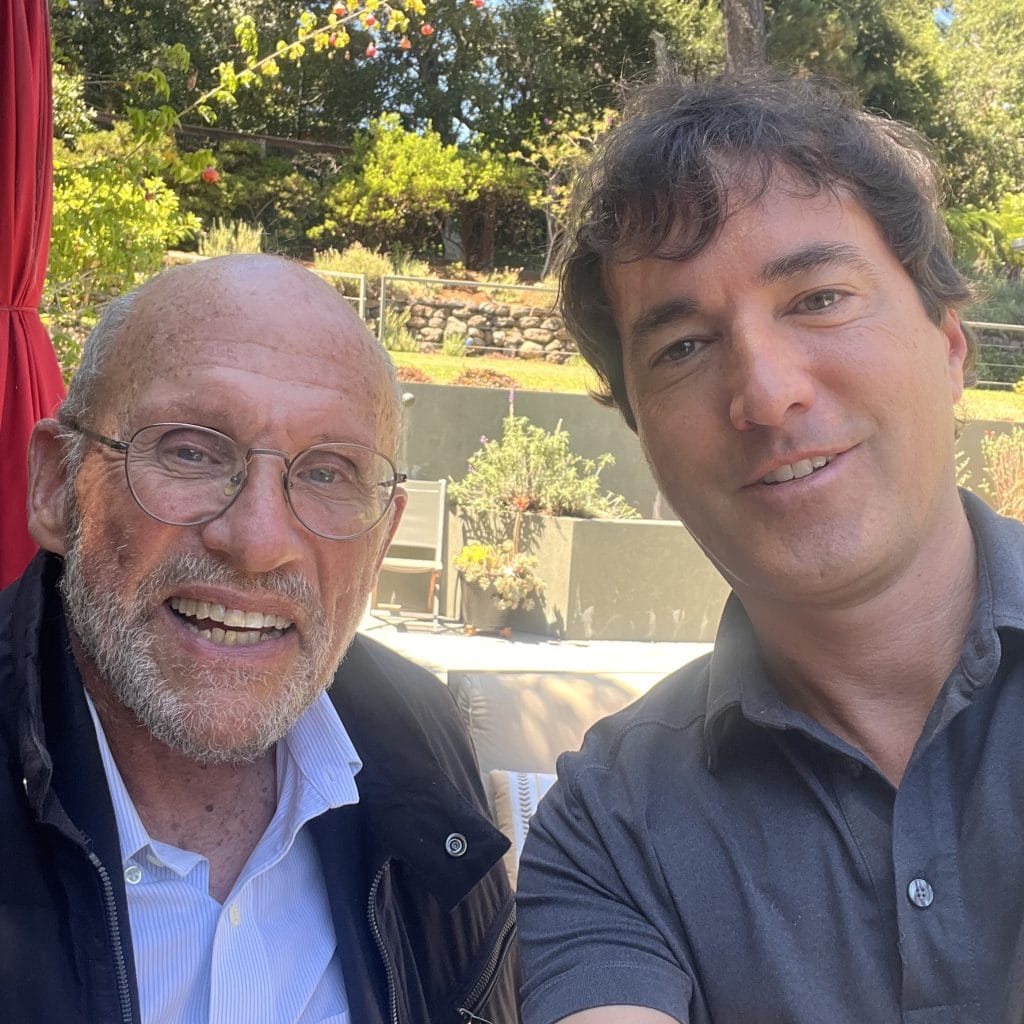
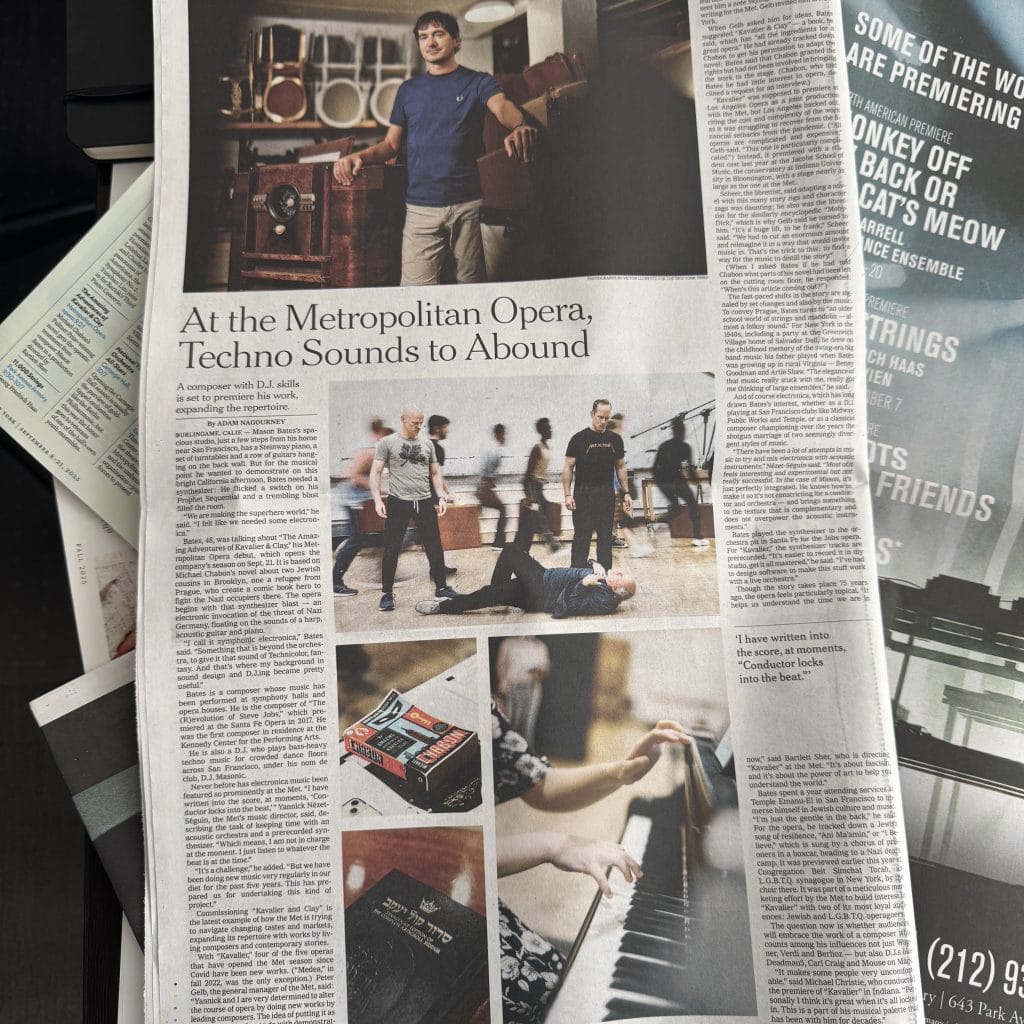
Grateful to The New York Times — and legendary journalist Adam Nagourney (pictured in last photo!)— for this in-depth feature on The Amazing Adventures of Kavalier & Clay, which opens the The Met Opera’s season on Sept 21.
The article traces nearly eight years of work adapting Michael Chabon’s Pulitzer Prize–winning novel into a two-act opera that moves from Nazi-occupied Prague to 1940s New York to a full-blown comic book universe. It also explores the opera’s use of symphonic electronica — blending orchestra with swing-era jazz, mandolin, Jewish liturgical music, and prerecorded electronic textures.
It’s an honor to open the Met season, and I’m deeply thankful to Gene Scheer, Bartlett Sher, Yannick Nézet-Séguin and the extraordinary Met Orchestra and Chorus, Peter Gelb, and everyone involved helping to make this happen!
Continue below or click here to read the full article!
The Composer Bringing ‘Symphonic Electronica’ to the Met
The Composer Bringing ‘Symphonic Electronica’ to the Met
With “The Amazing Adventures of Kavalier & Clay,” Mason Bates, a.k.a. DJ Masonic, expands the sound world of the Metropolitan Opera.
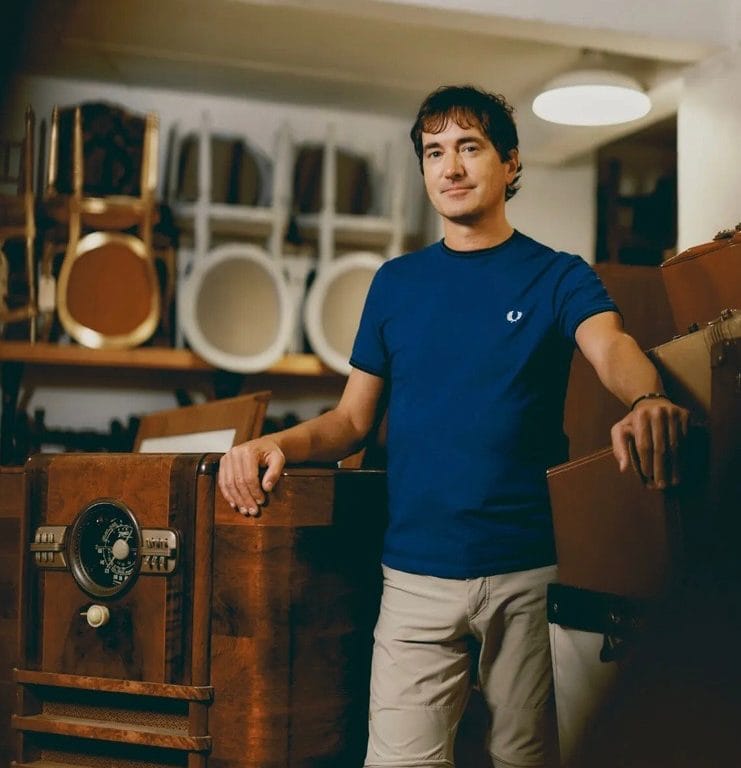
Reporting from Burlingame, Calif.Mason Bates’s spacious studio, just a few steps from his home near San Francisco, has a Steinway piano, a set of turntables and a row of guitars hanging on the back wall. But for the musical point he wanted to demonstrate on this bright California afternoon, Bates needed a synthesizer: He flicked a switch on his Prophet Sequential and a trembling blast filled the room.
“We are making the superhero world,” he said. “I felt like we needed some electronica.”
Bates, 48, was talking about “The Amazing Adventures of Kavalier & Clay,” his Metropolitan Opera debut, which opens the company’s season on Sept. 21. It is based on Michael Chabon’s novel about two Jewish cousins in Brooklyn, one a refugee from Prague, who create a comic book hero to fight the Nazi occupiers there. The opera begins with that synthesizer blast — an electronic invocation of the threat of Nazi Germany, floating on the sounds of a harp, acoustic guitar and piano.
“I call it symphonic electronica,” Bates said. “Something that is beyond the orchestra, to give it that sound of Technicolor, fantasy. And that’s where my background in sound design and DJing became pretty useful.”
Bates is a composer whose music has been performed at symphony halls and opera houses. He is the composer of “The (R) evolution of Steve Jobs,” which premiered at the Santa Fe Opera in 2017. He was the first composer in residence at the Kennedy Center for the Performing Arts.
He is also a DJ who plays bass-heavy techno music for crowded dance floors across San Francisco, under his nom de club, D.J. Masonic.
Lorem ipsum dolor sit amet, consectetur adipiscing elit. Ut elit tellus, luctus nec ullamcorper mattis, pulvinar dapibus leo.
Never before has electronica music been featured so prominently at the Met. “I have written into the score, at moments, ‘Conductor locks into the beat,’” Yannick Nézet-Séguin, the Met’s music director, said, describing the task of keeping time with an acoustic orchestra and a prerecorded synthesizer. “Which means, I am not in charge at the moment. I just listen to whatever the beat is at the time.”
“It’s a challenge,” he added. “But we have been doing new music very regularly in our diet for the past five years. This has prepared us for undertaking this kind of project.”
Commissioning “Kavalier and Clay” is the latest example of how the Met is trying to navigate changing tastes and markets, expanding its repertoire with works by living composers and contemporary stories.
With “Kavalier,” four of the five operas that have opened the Met season since Covid have been new works. (“Medea,” in fall 2022, was the only exception.) Peter Gelb, the general manager of the Met, said: “Yannick and I are very determined to alter the course of opera by doing new works by leading composers. The idea of putting it as a season opener has to do with demonstrating to the public how important new works are to the future of our art form.”
Bates, Gelb added, “represents the kind of American composer who is interested in doing what opera should have been doing with new music for a long time but hasn’t.”
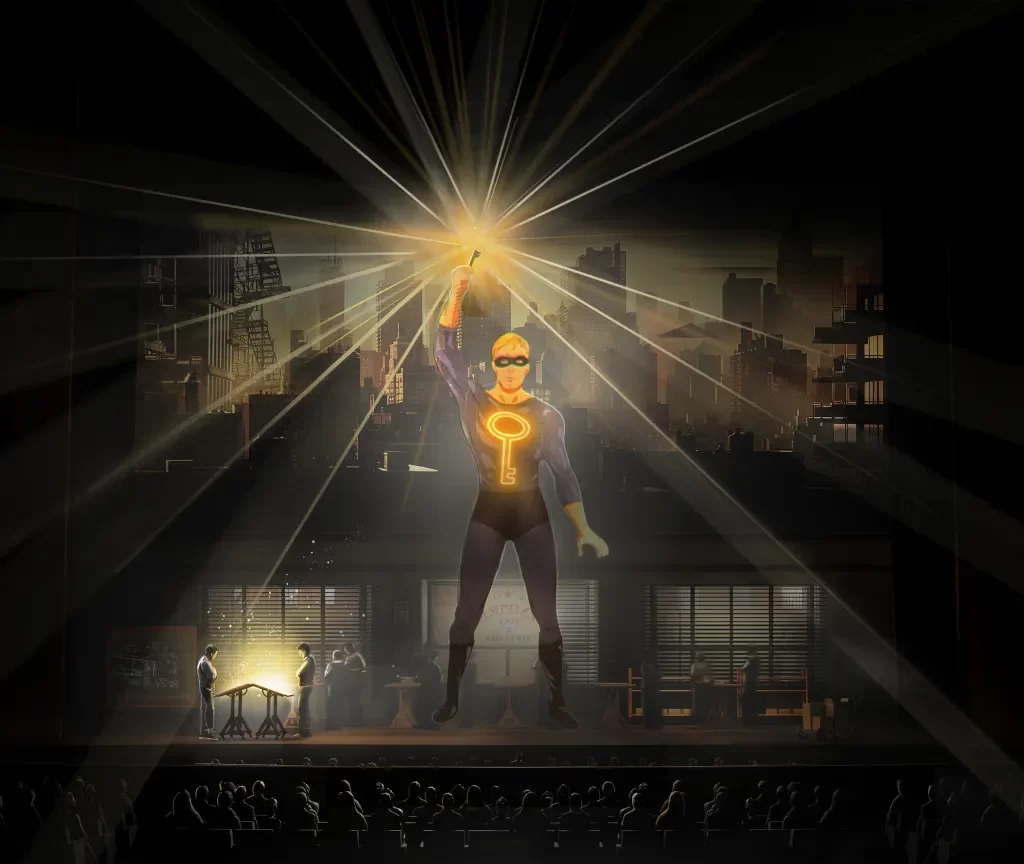
“Kavalier & Clay” is a sprawling novel that explores Judaism, the struggle against fascism, immigration, gay romance and comic book art. It focuses on Joe Kavalier, an artist and magician who escapes Prague for Brooklyn, and his cousin, Sammy Clay, a Brooklyn writer struggling with his sexuality. Working out of an apartment in Brooklyn, they create “The Escapist,” a comic superhero who becomes wildly popular in an America fixated on the advance of the Nazis and the outbreak of World War II.
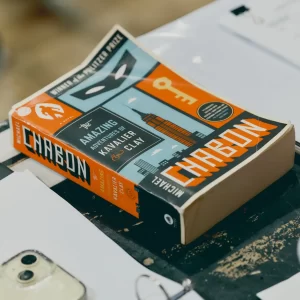
The novel’s more than 600 pages, covering 25 years, have been squeezed by Bates and the librettist, Gene Scheer, into a relatively brisk two-and-a-half hour opera. Its two acts are staged in Nazi-occupied Prague, New York City in the 1940s and an imaginary comic book universe that is revealed in animation on screens behind the singers, who include the baritone Andrzej Filonczyk as Joe and tenor Miles Mykkanen as Sam.
“It moves like ‘Raiders of the Lost Ark,’” Bates said. “It’s like, boom, boom, boom. Nazis. Superheroes.”
The opera has been nearly eight years in the making, dating back to 2017 when Gelb saw the Jobs opera in Santa Fe. Bates learned that Gelb was in the audience and sent him a note saying he was interested in writing for the Met. Gelb invited him to New York.
When Gelb asked him for ideas, Bates suggested “Kavalier & Clay” — a book, he said, which has “all the ingredients for a great opera.” He had already tracked down Chabon to get his permission to adapt the novel; Bates said that Chabon granted the rights, but has not been involved in bringing the work to the stage. (Chabon, who told Bates he has little interest in opera, declined a request for an interview.)
“Kavalier” was supposed to premiere at Los Angeles Opera as a joint production with the Met, but Los Angeles backed out, citing the cost and complexity of the work as it was struggling to recover from the financial setbacks from the pandemic. (“All operas are complicated and expensive,” Gelb said. “This one is particularly complicated.”) Instead, it premiered with a student cast last year at the Jacobs School of Music, the conservatory at Indiana University in Bloomington, with a stage nearly as large as the one at the Met.
Scheer, the librettist, said adapting a novel with this many story zigs and character zags was daunting; he also was the librettist for the similarly encyclopedic “Moby-Dick,” which is why Gelb said he turned to him. “It’s a huge lift, to be frank,” Scheer said. “We had to cut an enormous amount and reimagine it in a way that would invite music in. That’s the trick to this: to find a way for the music to distill the story.”
(When I asked Bates if he had told Chabon what parts of his novel had been left on the cutting room floor, he responded: “When’s this article coming out?”)