Michael Tilson Thomas Tribute in The New York Times

Michael Tilson Thomas Tribute in The New York Times

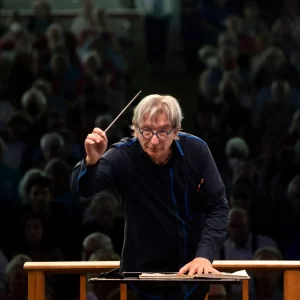
Such a moving tribute to the life and legacy of Michael Tilson Thomas in The New York Times.

Michael’s belief in young composers changed the trajectory of my career. From early performances of Mothership and The B-Sides with the YouTube Symphony to conversations about opera and audience-building years later, his generosity, curiosity, and vision shaped so many artists of my generation.

Very grateful to be included among the musicians reflecting on his enormous impact. Read the full article below. 

For Michael Tilson Thomas’s Legacy, Look at Young Musicians

Thomas, the beloved mentor and conductor of the San Francisco Symphony, recently died. He offered a road map for a 21st-century career in music.

By Hannah Edgar


Teddy Abrams wasn’t expecting a response.

Long before he became the music director of the Louisville Orchestra and the incoming artistic and executive director of the Ojai Music Festival, Abrams, who turns 39 on Wednesday, was a 9-year-old clarinet student kvelling from his first time hearing the San Francisco Symphony live. It was an all-Gershwin program led by the orchestra’s new conductor, Michael Tilson Thomas. Abrams dashed off a 10-page fan letter to him.

To Abrams’s surprise, a response landed in his family’s mailbox a week later, on official San Francisco Symphony letterhead.

“Thank you for your friendly note,” Thomas’s reply began. “Obviously Mozart and Beethoven are big favorites of yours. Have you listened to any 20th-century composers, like Stravinsky or Prokofiev or Bartok?”

Thomas, who died on April 22 at 81, was a master of genial introductions like this. To many in the Bay Area and beyond, his multi-pronged career — as a conductor, musical explainer, composer, pianist and local luminary — was nothing less than a mold for a 21st-century life in the arts.

“Those are some of my greatest memories, actually, watching those,” said the multifaceted violinist Alexi Kenney, 32, who grew up in Palo Alto, Calif., and recently moved to San Francisco. “His educational side was huge for me.”

Thomas’s impact on younger generations of musicians is most palpable through New World, many of whose 1,300 alumni now play in professional orchestras. And he launched many an international career, as an early champion of artists like the pianist Yuja Wang, the director Yuval Sharon and the soprano Julia Bullock, who was still a Juilliard student when he invited her to sing “Somewhere” in “West Side Story” with the San Francisco Symphony.

“He wanted,” Bullock said, “to take a chance on me.”

Thomas set a standard for the role music directors could play in their cities. He lived in San Francisco, sharing a handsomely appointed mansion in Pacific Heights with his husband, Joshua Robison, who died in February. It was common to see them walking their poodles through the nearby Marina District, or hobnobbing with local politicians like Nancy Pelosi and Kamala Harris. During his tenure, the San Francisco Symphony collaborated with members of the Grateful Dead and Metallica, bands with a Bay Area vintage.


“Sitting in Davies Hall next to a bunch of Deadheads reeking of cannabis — it certainly felt different, like something in the culture had changed,” said the composer Samuel Adams, who grew up in Berkeley, with the eminent composer John Adams as his father.

The day Thomas’s death was announced, several Bay Area landmarks, including Coit Tower, lit up in his signature blue, and, unusually for a classical musician, the San Francisco Giants observed a moment of silence.

“M.T.T. was our guy for 25 years,” said the cellist and content creator Nathan Chan, using the widely adopted nickname made from Thomas’s initials. “As a young musician in the Bay Area, I got to experience a consistency of leadership from him that everybody who grew up there will never forget.”

San Francisco had long been ready for a leader like Thomas. Its orchestra had been polished enough by previous music directors to stand alongside other great American ensembles by the time he took over. But he and his Los Angeles counterpart, Esa-Pekka Salonen, went the extra step of fashioning their institutions into cultural labs of sorts, without shorting artistic quality.

“The symphony was not a fixer-upper institution,” Abrams said, “but it was primed for international recognition if it could do something dramatic and different.”


And Thomas — a child of the theater, through his grandparents and parents — knew drama. As a young cellist, Oliver Herbert was awed by Thomas’s semi-staged productions of “Bluebeard’s Castle,” “Peer Gynt” and “Boris Godunov.” Today, Herbert, 28, produces multimedia recitals as part of his ongoing professional studies program in Kronberg, Germany.

The fortune teller told Thomas that he wouldn’t start doing the thing he’d be remembered for until his 50s, he recalled. He was 49 and on the eve of his move to San Francisco.

“Whatever it is,” Thomas said, “it’s about to happen.”

“I think Michael is a big part of the reason,” he said, “why I allow myself to think creatively about the concert experience.”

With the rise of YouTube, Thomas was one of the first major conductors to harness its power as a creative and pedagogical tool. He founded the YouTube Symphony Orchestra, which accepted international auditions and produced concerts that were livestreamed to an audience in the tens of millions.

That project brought Mason Bates, the composer of “The Amazing Adventures of Kavalier & Clay” at the Metropolitan Opera this season, to wider renown. His compositions “The B-Sides” and “Mothership” were performed by the YouTube Symphony Orchestra. Bates credits Thomas with bringing his music “to a national audience,” which, he said, led to a commission from Santa Fe Opera for his first opera, “The (R)evolution of Steve Jobs.”

“I mean, this is the guy that premiered ‘Short Ride in a Fast Machine,’ which is one of the most performed new pieces by a living composer,” said Bates, referring to a short work by John Adams. “He gave me specific musical feedback, which not a lot of conductors do.”

In recent years, he sought Thomas’s counsel while composing “Kavalier & Clay.” Bates has also been working to adapt his “Philharmonia Fantastique” — an animated introduction to the symphony orchestra — into a children’s exhibition, and he said that his quest to find creative, immersive ways to reach young audiences bears Thomas’s stamp.

“Michael has been the model for me of how an artist in 21st-century America can bring the deep experience of classical music to everybody,” Bates said.

In his final chapter, Thomas returned, again, to working with young people. He was appointed a distinguished professor of music at the San Francisco Conservatory of Music in 2024, at a time when his public appearances dwindled following a diagnosis of aggressive brain cancer a few years earlier. At the school, he led readings with the student orchestra, coached chamber groups and gave one-on-one private lessons with especially promising students.

The arrangement, made at Robison’s urging, was mutually beneficial, said the school’s president, David Stull. Thomas would remain intellectually active, and students would have the chance to learn from someone who had shaped San Francisco’s musical culture.

“He knew that he needed to rest and conserve his energy, but he wanted to work,” Stull said. “We’re the last generation to work with him.”

Since Thomas’s death, Abrams has spent time dwelling over Thomas’s letter. It’s framed in his bedroom in Louisville, where he lives full time — yet another way in which he has followed in his mentor’s footsteps.

Abrams has also returned to a detail at the end of “Viva Voce,” Thomas’s 1994 as-told-to memoir written with the British music journalist Edward Seckerson. In it, Thomas describes getting a palm reading abroad.


The fortune teller told Thomas that he wouldn’t start doing the thing he’d be remembered for until his 50s, he recalled. He was 49 and on the eve of his move to San Francisco.

“Whatever it is,” Thomas said, “it’s about to happen.”

Great Performances at the Met: The Amazing Adventures of Kavalier & Clay

The Amazing Adventures of Kavalier & Clay Now Streaming on PBS’ Great Performances

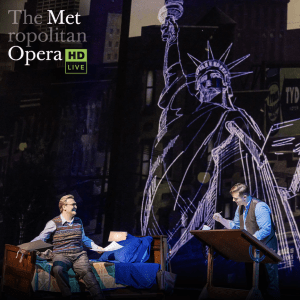
Mason Bates and librettist Mark Campbell’s The Amazing Adventures of Kavalier & Clay is now available to stream as part of PBS’ Great Performances at the Met through September 30.

In this adaptation of Michael Chabon’s Pulitzer Prize–winning novel, set shortly before the outbreak of World War II, two Jewish cousins invent an anti-fascist superhero and launch their own comic-book series, hoping to recruit America into the fight against Nazism.

The Metropolitan Opera’s production team captures the scale and visual world of the opera with striking clarity on screen, with the detail and design especially vivid when viewed on a larger format.

Bates is deeply grateful to the cast, creative team, orchestra, and crew who brought the work to life on stage, and now to an even wider audience through this broadcast.


The streaming release offers audiences the opportunity to experience the opera on their own time, wherever they are.

Mason’s Music Celebrated in Milan with Two Concerts at Teatro Dal Verme

Mason's Music Celebrated in Milan with Two Concerts at Teatro Dal Verme

I’m still thinking about an incredible week in Milan.

It was a joy to return to Italy, where I lived for a year earlier in my life, and to hear full programs of my music performed by the fantastic I Pomeriggi Musicali at Teatro Dal Verme. The orchestra brought huge energy to Mothership, the Piano Concerto, and Philharmonia Fantastique, and it was wonderful to see such full houses for both concerts.


My thanks to director Maurizio Salerno for dreaming up the project, to Ryan McAdams for conducting so brilliantly, and to Shai Wosner for absolutely nailing the concerto. The orchestra, stage crew, and technical teams made the entire week feel electric.

Milan also delivered some of the pleasures that make Italy unforgettable. There was excellent seafood, a few very good Negronis, and plenty of late night conversation with musicians and friends. And after the first concert, we kept the music going with a late night DJ set.

The trip ended with one final unforgettable moment on the flight home: a stunning view over the Dolomites that felt like the perfect curtain call to the week.

Already looking forward to the next visit to Milan.


A Milestone for New Opera at the Met

When Audiences Show Up for New Work:
Kavalier & Clay Closes Met Run with Remarkable Moment

Seeing this statistic for a brand-new opera is pretty remarkable. The Amazing Adventures of Kavalier & Clay has just completed its run at the Metropolitan Opera, and the audience response was strong enough to bring it back for additional performances. For a new work, that’s not something to take lightly.

What’s been most meaningful to me is what that response represents. When audiences show up for new stories at this scale, it reinforces something I’ve believed for a long time: contemporary opera belongs at the center of the conversation. It’s not separate from the tradition. It’s part of the living, evolving art form.

This run was powered by an extraordinary cast and creative team who fully embodied these characters and gave everything to the piece night after night. Their commitment was palpable, and it’s what allowed the story to connect so deeply. I’m also grateful to the Met for continuing to invest in new work alongside the classics. That balance matters.

The final curtain fell on Saturday, but the enthusiasm for new opera feels very real right now. If this run is any indication, audiences are ready for bold, contemporary stories on the biggest stages.


And thank you to @operascriticalpt on IG for creating and sharing the visual that sparked this reflection.

Kavalier & Clay Returns to the Met and Hits Movie Theaters

As we usher in the new year, I’m thrilled to be back in the saddle with The Amazing Adventures of Kavalier & Clay. Thanks to the extraordinary work of the cast, production team, and the company’s outreach, the opera achieved such remarkable box office success that it’s been given the unprecedented honor of a midseason revival, February 17–21.

Whether you missed the chance to experience the piece in its dazzling production this fall, or caught a show and want another dive into this epic American story, the opportunity is here. The energy will be electric in the house.

There’s one other way to immerse yourself in the worlds of comic books, World War II battle scenes, and heartfelt love stories: the Met HD broadcasts on January 24 & 28Click here to find showtimes at your local cinema and grab the popcorn!

World Premiere of Stable of Grace at Grace Cathedral

World Premiere of Stable of Grace at Grace Cathedral

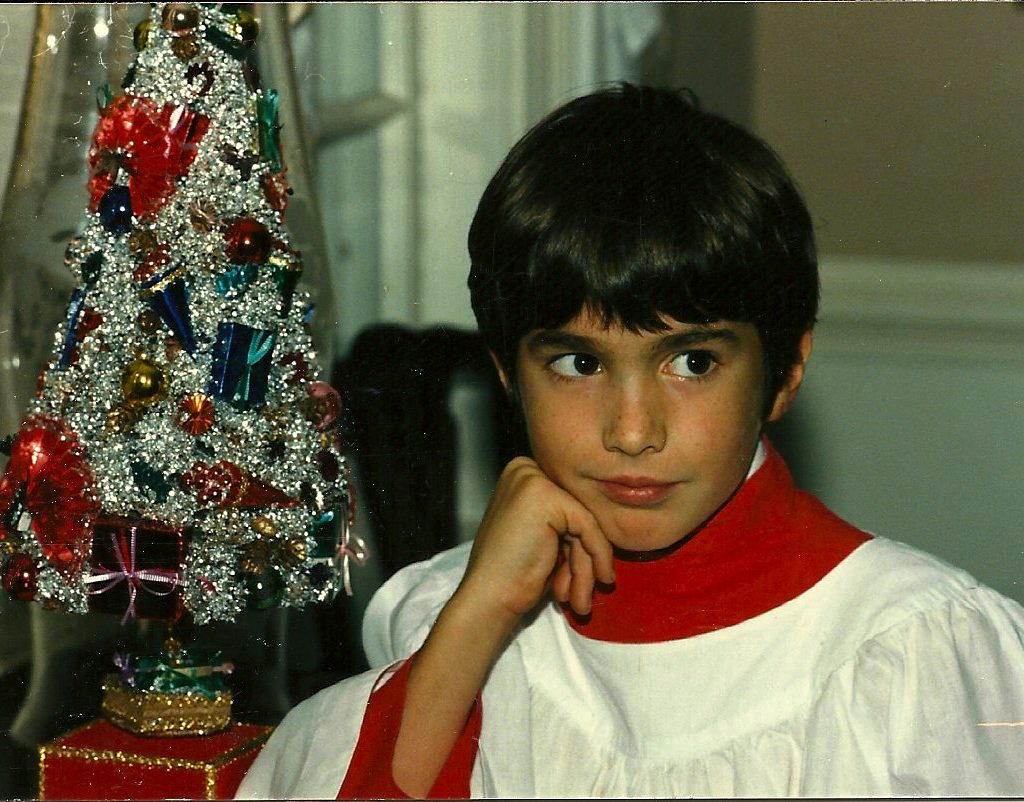
Full circle!  Long before I became a DJ, composer, and all-around West Coast düde, I was a robe-wearing choirboy at St. Christopher’s School in Virginia.  So I’m thrilled to hear the upcoming premiere of Stable of Grace, for chorus, organ, and chamber orchestra, on the magical and legendary Christmas concerts at Grace Cathedral.
 
This commission is a key part of my artist-in-residency at Grace Cathedral, which has hosted luminaries from Bobby McFerrin to Alonzo King as part of their incredible GraceArts program.
 
Stable of Grace is the first piece I’ve composed to my own text.  In considering a fresh angle to bring to a Christmas concert, I found myself searching for texts about the stable itself – the sights, sounds, smells of the ‘room where it happened.’  The humble birth in a stable, surrounded by shepherds and livestock, is (to me) the most badass part of Luke’s account.  
 
I wanted a detail-rich text that focused entirely on this simple space, with the ‘reveal’ of baby Jesus at the end – which would allow me to write earthy, folk-informed music that unfolded into a magical ending.  Well, I couldn’t find exactly that, so I channeled my long-lost wordsmithing to create Stable of Grace.  
 
It’s an honor to write for the Grace Cathedral Choir of Men & Boys, led by music director Jared Johnson.  The piece is dedicated to Rev. Malcolm Clemens Young, the Dean of Grace Cathedral who has become a friend and mentor.

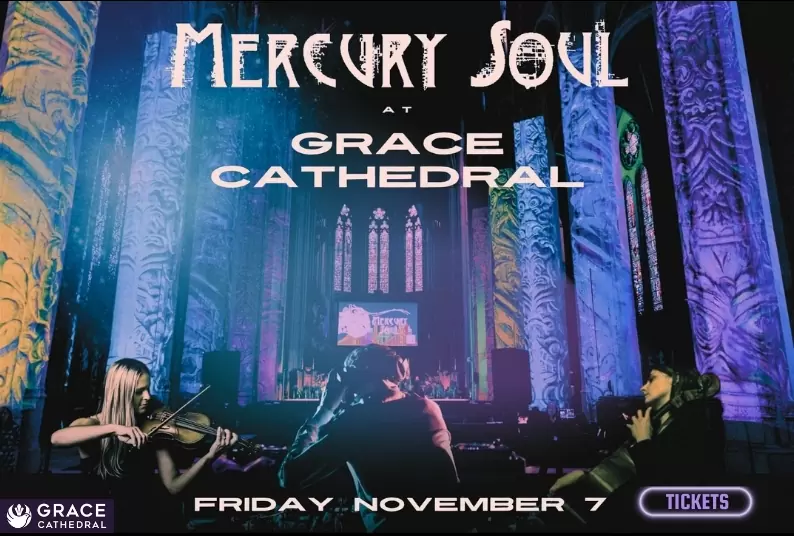
Mercury Soul Returns to Grace Cathedral Nov 7

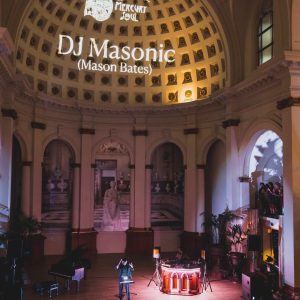
I’m thrilled that Mercury Soul is returning to Grace Cathedral on November 7! We’ve got an all-star lineup of musicians, DJs, and visual artists coming together for one of our most ambitious productions yet. This show brings together sweeping classical works, deep electronic grooves, and large-scale immersive visuals that transform the cathedral into a living, breathing instrument of light and sound. It’s an unforgettable night where concert meets club — and where a world premiere, a birthday celebration for Arvo Pärt, and some truly wild collaborations all share the same sacred space. Learn more and get tickets here


Mercury Soul returns to Grace Cathedral with a stunning new show!
 

Sweeping classical works collide with deep DJ grooves and a cathedral-sized dance party, all amplified by towering large-scale visuals designed for the vast architecture. Wander through soaring gothic spaces, bathed in sound and light. Fresh collaborations, intensified visuals and surprising repertoire transport you on an entirely reimagined journey through classical and club worlds.

Featuring the world premiere of a new full length composition by Grammy-winning composer Mason Bates!  Plus a special celebration of Arvo Pärt’s 90th birthday with additional music by Philip Glass, Hildegard, Debussy, Aurora and more!

With DJ sets by: 
GARZA of Thievery Corporation (DJ Set) 
DJ Masonic (Mason Bates)
DJ Justin Reed (illmeasures, Chicago)

Featuring:
The Young Women’s Chorus of San Francisco
The Mercury Soul Cello Ensemble
Violin prodigy Ava Pakiam
Soprano Aaliyah Capili
Harpist Julia Gruenbaum
Percussionist Ben Paysen
Conducted by Brad Hogarth

Immersive Visuals by Mark Johns
Interactive LED Art by Christopher Schardt

Friday, November 7th at 7:30pm
Grace Cathedral: 1100 California St, San Francisco, CA 94108
All ages are welcome.


A New Sonic Logo for Charlotte Symphony!

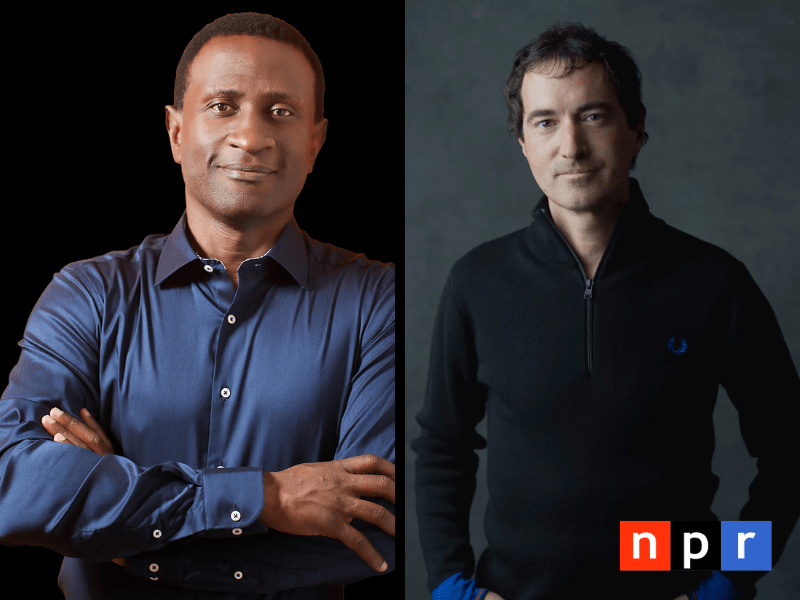
Honored to have created a seven-second symphonic logo for the Charlotte Symphony — the first U.S. orchestra to incorporate sound into its branding! Thank you to NPR’s All Things Considered for profiling this exciting new collaboration — you can listen to the full story here!

It was a fun challenge to capture the color and energy of a full orchestra in just a few seconds — a little burst of magic that says, “something special is about to begin.”

Huge thanks to Music Director Kwamé Ryan and everyone at the Charlotte Symphony for inviting me to be part of this innovative project.

A new short sound logo for the Charlotte symphony October 20, 20255:02 PM ET Heard on All Things Considered By Eric Teel

MARY LOUISE KELLY, HOST: It’s not every day that an orchestra commissions a new piece of music, especially one designed to last just a few seconds. The Charlotte Symphony Orchestra did just that. They wanted what is called a sonic logo, and now it’s likely the first U.S. orchestra to have one. Eric Teel with member station WFAE in Charlotte was at the unveiling.

ERIC TEEL, BYLINE: Sonic logos are everywhere, like…

TEEL: …The ta-dum (ph) from Netflix or…

TEEL: …NBC’s iconic three chimes, or even…

TEEL: …This little deedle (ph) thing of T-Mobile. So when the Charlotte Symphony Orchestra recently updated its visual logo to a large C, music director Kwame Ryan thought, why not get a sonic logo?

KWAME RYAN: The idea is that when people hear a sound that they associate with the orchestra, just as they do in the cinema, they know that the next thing that happens is an event.

TEEL: Ryan enlisted the help of Grammy-winning composer Mason Bates. Bates says while he wanted to capture the depth and excitement of a symphony’s performance in just a few seconds, he’d never composed anything that short.

MASON BATES: It’s hard in a fun way because you don’t have the luxury of building any kind of a case. You have to kind of pull the listener in immediately.

TEEL: Sonic logos are important tools for marketing products, says Susan Rogers, a behavioral neuroscientist and author of “This Is What It Sounds Like.” She specializes in the emotional impact of sound.

SUSAN ROGERS: If in that first few seconds, the brain decides – this is for me; I like this; please continue – you will continue to listen further. Orchestral music is associated with kind of a highbrow culture. But if the piece of music is really catchy and memorable, it can also welcome in a new generation of listeners.

TEEL: For composer Mason Bates, it was important that the seven-second piece showed off the full orchestra.

BATES: I wanted to have a sense of, like, magic and mystery of things swirling together, where you can hear the different individual instruments kind of building up out of this, like, quicksilver primordial soup.

TEEL: The new sonic logo was unveiled as part of the symphony’s season-opening concert.

TEEL: Season ticket holder John Stanley Ross was thrilled and likes that it will be used during intermission on the intercom.

JOHN STANLEY ROSS: It’s very professional. It’s iconic. And it’s much better than dimming the lights, you know? Hearing this beautiful music is – OK, time to go get our seats. It’s a wonderful thing.

TEEL: The sonic logo will also be used in radio and TV ads for the orchestra, but due to recording agreements with the national musicians union, it will be this studio version created by Bates.

TEEL: For NPR News, I’m Eric Teel in Charlotte.

Kavalier & Clay is a Met Opera Bestseller

“Kavalier & Clay is its top-performing opera at the box office so far this season. Ticket sales for the opening night were the Met’s highest this decade.”
– The Economist

UPDATE: Due to popular demand, The Amazing Adventures of Kavalier and Clay has been scheduled for four additional performances on February 17, 18, 20, and 21, 2026, and has been added to the Met’s cinema release series beginning January 24. Read the full press release here. 

It’s so rare for performing arts to make it into the pages of The Economist, which covers such a huge range of world events.  Many thanks to James Taylor for such a thoughtful look at The Amazing Adventures of Kavalier & Clay.

Read the full article below! 

With “Kavalier & Clay”, the Met is holding out for superheroes

The opera, adapted from a prizewinning novel, brings stunts and sopranos together
October 2, 2025

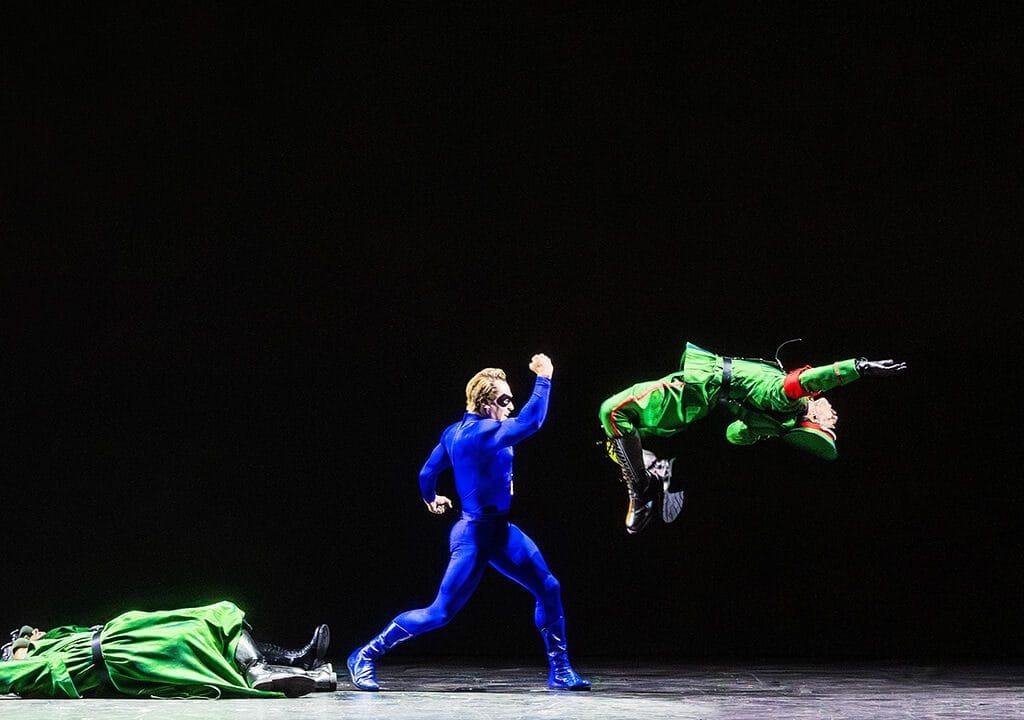
THE ESCAPIST, as his name suggests, is skilled at getting himself in and out of tricky situations. With his muscles rippling in a blue Spandex suit—and his motif, a key, gleaming on his chest—he climbs buildings and crosses oceans. In one bravura sequence, set to thrilling music, he leaps past enemy lines and punches Adolf Hitler, knocking the Führer unconscious. The audience erupts into applause.


This would not be so unusual were they sitting in a multiplex, but the crowd was gathered at the Metropolitan Opera House in New York. The company is opening its 142nd season without star singers, but with The Escapist and Luna Moth. The characters first appeared 25 years ago in “The Amazing Adventures of Kavalier & Clay”, a Pulitzer-prizewinning novel by Michael Chabon. The Met’s executives are clearly hoping that these fictional superheroes will prove a draw to the legions of fans of the Marvel and DC franchises.


“Kavalier & Clay” begins in 1939 and tells the story of two cousins. Joe has fled from Nazi-occupied Prague for New York, where he is staying with Sammy. They bond over the creation of a comic book, inspired by Joe’s family’s plight, with a Nazi-bashing protagonist. The novel celebrated the early days of the comic-book industry, with “ink-smirched young men, drinking, smoking, lying around with their naked big toes protruding from the tips of their socks”. Over the years attempts to turn the bestselling book into a film have foundered, despite the superhero genre’s box-office domination.


Mason Bates, an American composer, approached the Met about adapting the book back in 2017 after his first opera, “The (R)evolution of Steve Jobs”, was well received. “It’s a sprawling American epic,” he says of the tale, “but at its heart, it’s about two desperate artists trying to save their family and falling in love while it happens. I think that makes it an opera.”


The book, which runs to more than 600 pages, has been efficiently streamlined. (Mr Chabon was not involved in adapting it.) Action abounds in the first half of the opera; there are old-fashioned arias, too, mostly sung by Sun-Ly Pierce, a mezzo-soprano who plays Rosa Saks, a painter entangled with both men. But much of the piece unfolds in a musical-theatre style, steeped in jazzy sounds for the New York scenes and Slavic themes for the passages in Prague. Many of the most ear-grabbing bits are instrumental and electronic rather than vocal. In its best moments Mr Bates’s score calls to mind Leos Janacek’s opera of 1924, “The Cunning Little Vixen”—itself based on a Czech comic strip.


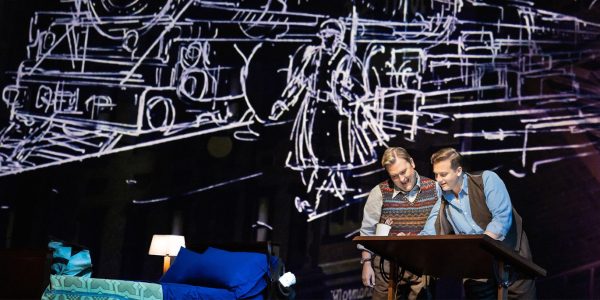
The book’s superheroes appear visually, artfully rendered in digital animations or via acrobatic dancers who tumble on stage or soar through the air on wires in Bartlett Sher’s nimble production. Mr Bates and his librettist, Gene Scheer, wisely never let The Escapist or Luna Moth break into song. Historically, warbling superheroes have not fared well on stage. A Superman musical flopped on Broadway in 1966—as did a Spider-Man one in 2011, despite having music by Bono and the Edge of U2.


Was the Met right to put its trust in superheroes? It seems so. The company reports that “Kavalier & Clay” is its top-performing opera at the box office so far this season. Ticket sales for the opening night were the Met’s highest this decade. Mr Chabon, too, is a fan, telling your correspondent that “I feel I need to see it again.”


Whether audiences outside New York will ever see “Kavalier & Clay” is unclear. The Met did not collaborate with another major company on it, so there is no obvious house for another production. What one character says of The Escapist is also true of new operas: “The greatest trick of all is not to vanish…but re-appear.”

Kavalier and Clay Reviews are in!

I’m so grateful to everyone who came out for Opening Night of The Amazing Adventures of Kavalier & Clay. It was pure joy to finally share this piece with you, and so moving to hear the reactions and read the reviews:

“Kavalier & Clay is its top-performing opera at the box office so far this season. Ticket sales for the opening night were the Met’s highest this decade.”
The Economist

“The Met is back with a bang … Bates’s vocal writing allows his singers plenty of opportunities to shine, with long soaring lines.” 
The Times 

 “An absolute knockout …a highly entertaining evening… Bates keeps the narrative moving swiftly, and his transitions from scene to scene are admirably deft, especially given how frequently the setting shifts… His music is unabashedly tonal, colourfully orchestrated, and he employs electronic sounds with precision and restraint.”
The Financial Times

“This has blockbuster appeal … it takes advantage of the grand opera format and puts the more filmic qualities of Bates’s writing to perfect use.”
– The Observer

 “This was arguably the most successful opening night the company has had since the pandemic … Full of poetic gestures, and moments that truly sear into your heart and mind.” 
– OperaWire 

“Bates’s score with its mix of electronics and acoustic instruments is engrossing and carries real emotional weight. … his use of electronica adds layers of texture and color to the score and makes the comic-book scenes pop with excitement.”
– Seen and Heard International