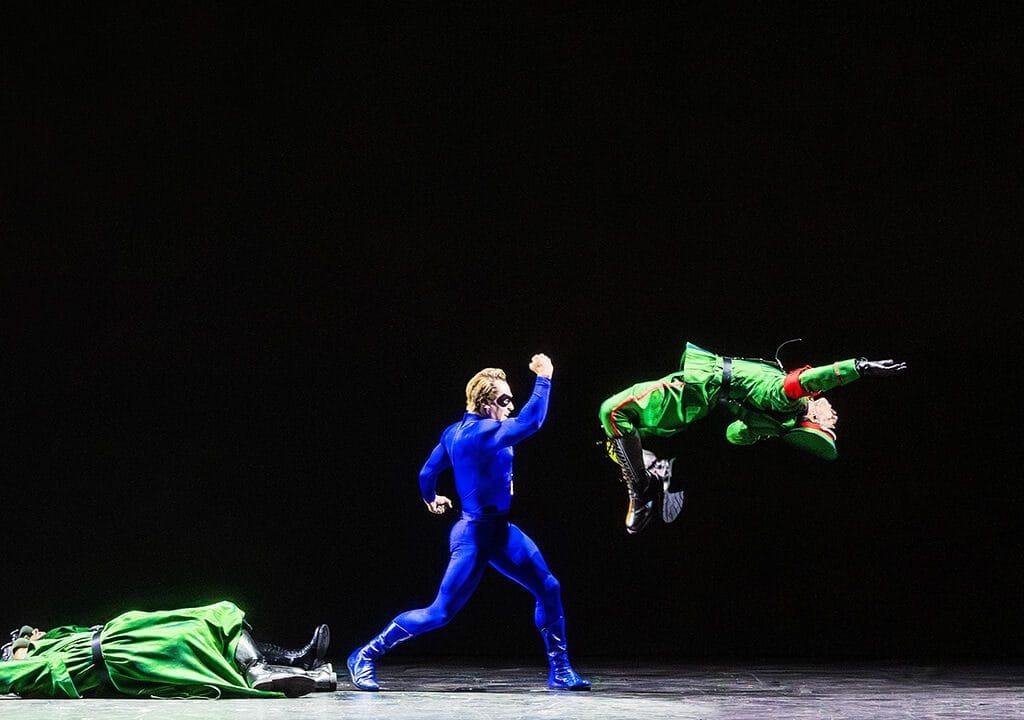
Kavalier & Clay Returns to the Met and Hits Movie Theaters

As we usher in the new year, I’m thrilled to be back in the saddle with The Amazing Adventures of Kavalier & Clay. Thanks to the extraordinary work of the cast, production team, and the company’s outreach, the opera achieved such remarkable box office success that it’s been given the unprecedented honor of a midseason revival, February 17–21.

Whether you missed the chance to experience the piece in its dazzling production this fall, or caught a show and want another dive into this epic American story, the opportunity is here. The energy will be electric in the house.

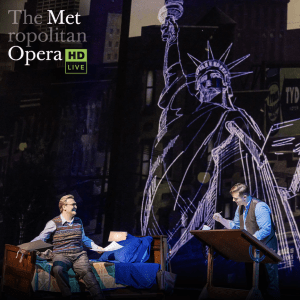
There’s one other way to immerse yourself in the worlds of comic books, World War II battle scenes, and heartfelt love stories: the Met HD broadcasts on January 24 & 28Click here to find showtimes at your local cinema and grab the popcorn!

World Premiere of Stable of Grace at Grace Cathedral

World Premiere of Stable of Grace at Grace Cathedral

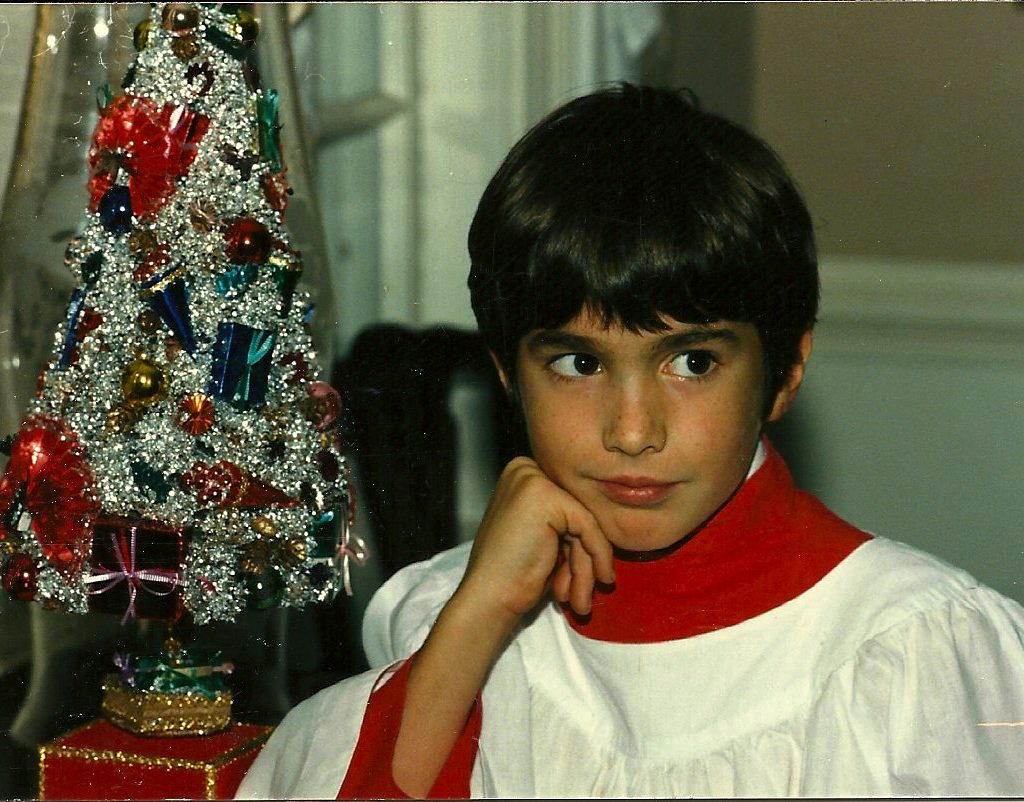
Full circle!  Long before I became a DJ, composer, and all-around West Coast düde, I was a robe-wearing choirboy at St. Christopher’s School in Virginia.  So I’m thrilled to hear the upcoming premiere of Stable of Grace, for chorus, organ, and chamber orchestra, on the magical and legendary Christmas concerts at Grace Cathedral.
 
This commission is a key part of my artist-in-residency at Grace Cathedral, which has hosted luminaries from Bobby McFerrin to Alonzo King as part of their incredible GraceArts program.
 
Stable of Grace is the first piece I’ve composed to my own text.  In considering a fresh angle to bring to a Christmas concert, I found myself searching for texts about the stable itself – the sights, sounds, smells of the ‘room where it happened.’  The humble birth in a stable, surrounded by shepherds and livestock, is (to me) the most badass part of Luke’s account.  
 
I wanted a detail-rich text that focused entirely on this simple space, with the ‘reveal’ of baby Jesus at the end – which would allow me to write earthy, folk-informed music that unfolded into a magical ending.  Well, I couldn’t find exactly that, so I channeled my long-lost wordsmithing to create Stable of Grace.  
 
It’s an honor to write for the Grace Cathedral Choir of Men & Boys, led by music director Jared Johnson.  The piece is dedicated to Rev. Malcolm Clemens Young, the Dean of Grace Cathedral who has become a friend and mentor.

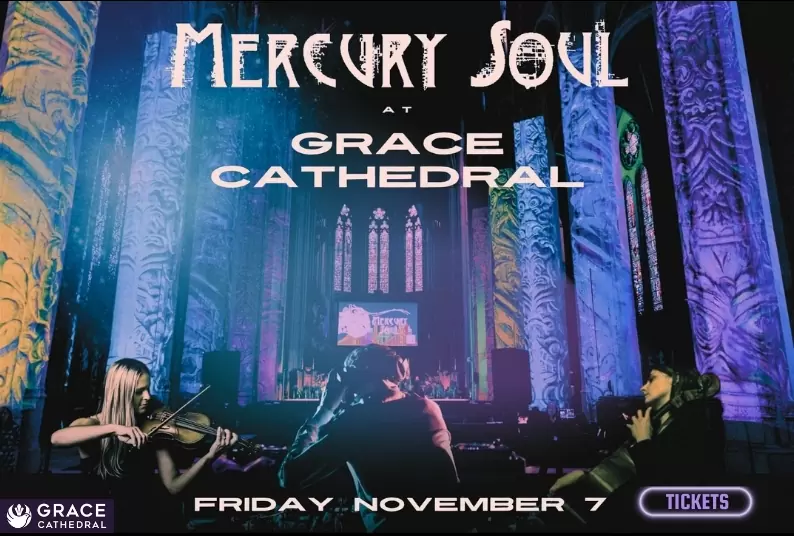
Mercury Soul Returns to Grace Cathedral Nov 7

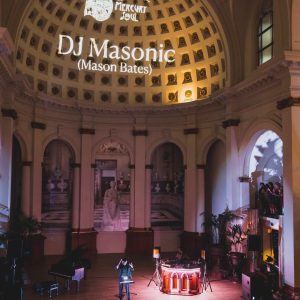
I’m thrilled that Mercury Soul is returning to Grace Cathedral on November 7! We’ve got an all-star lineup of musicians, DJs, and visual artists coming together for one of our most ambitious productions yet. This show brings together sweeping classical works, deep electronic grooves, and large-scale immersive visuals that transform the cathedral into a living, breathing instrument of light and sound. It’s an unforgettable night where concert meets club — and where a world premiere, a birthday celebration for Arvo Pärt, and some truly wild collaborations all share the same sacred space. Learn more and get tickets here


Mercury Soul returns to Grace Cathedral with a stunning new show!
 

Sweeping classical works collide with deep DJ grooves and a cathedral-sized dance party, all amplified by towering large-scale visuals designed for the vast architecture. Wander through soaring gothic spaces, bathed in sound and light. Fresh collaborations, intensified visuals and surprising repertoire transport you on an entirely reimagined journey through classical and club worlds.

Featuring the world premiere of a new full length composition by Grammy-winning composer Mason Bates!  Plus a special celebration of Arvo Pärt’s 90th birthday with additional music by Philip Glass, Hildegard, Debussy, Aurora and more!

With DJ sets by: 
GARZA of Thievery Corporation (DJ Set) 
DJ Masonic (Mason Bates)
DJ Justin Reed (illmeasures, Chicago)

Featuring:
The Young Women’s Chorus of San Francisco
The Mercury Soul Cello Ensemble
Violin prodigy Ava Pakiam
Soprano Aaliyah Capili
Harpist Julia Gruenbaum
Percussionist Ben Paysen
Conducted by Brad Hogarth

Immersive Visuals by Mark Johns
Interactive LED Art by Christopher Schardt

Friday, November 7th at 7:30pm
Grace Cathedral: 1100 California St, San Francisco, CA 94108
All ages are welcome.


A New Sonic Logo for Charlotte Symphony!

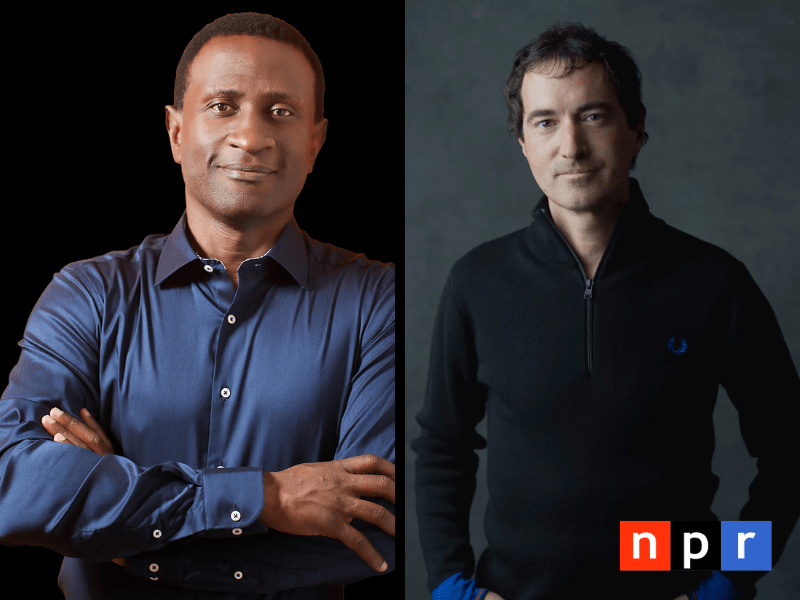
Honored to have created a seven-second symphonic logo for the Charlotte Symphony — the first U.S. orchestra to incorporate sound into its branding! Thank you to NPR’s All Things Considered for profiling this exciting new collaboration — you can listen to the full story here!

It was a fun challenge to capture the color and energy of a full orchestra in just a few seconds — a little burst of magic that says, “something special is about to begin.”

Huge thanks to Music Director Kwamé Ryan and everyone at the Charlotte Symphony for inviting me to be part of this innovative project.

A new short sound logo for the Charlotte symphony October 20, 20255:02 PM ET Heard on All Things Considered By Eric Teel

MARY LOUISE KELLY, HOST: It’s not every day that an orchestra commissions a new piece of music, especially one designed to last just a few seconds. The Charlotte Symphony Orchestra did just that. They wanted what is called a sonic logo, and now it’s likely the first U.S. orchestra to have one. Eric Teel with member station WFAE in Charlotte was at the unveiling.

ERIC TEEL, BYLINE: Sonic logos are everywhere, like…

TEEL: …The ta-dum (ph) from Netflix or…

TEEL: …NBC’s iconic three chimes, or even…

TEEL: …This little deedle (ph) thing of T-Mobile. So when the Charlotte Symphony Orchestra recently updated its visual logo to a large C, music director Kwame Ryan thought, why not get a sonic logo?

KWAME RYAN: The idea is that when people hear a sound that they associate with the orchestra, just as they do in the cinema, they know that the next thing that happens is an event.

TEEL: Ryan enlisted the help of Grammy-winning composer Mason Bates. Bates says while he wanted to capture the depth and excitement of a symphony’s performance in just a few seconds, he’d never composed anything that short.

MASON BATES: It’s hard in a fun way because you don’t have the luxury of building any kind of a case. You have to kind of pull the listener in immediately.

TEEL: Sonic logos are important tools for marketing products, says Susan Rogers, a behavioral neuroscientist and author of “This Is What It Sounds Like.” She specializes in the emotional impact of sound.

SUSAN ROGERS: If in that first few seconds, the brain decides – this is for me; I like this; please continue – you will continue to listen further. Orchestral music is associated with kind of a highbrow culture. But if the piece of music is really catchy and memorable, it can also welcome in a new generation of listeners.

TEEL: For composer Mason Bates, it was important that the seven-second piece showed off the full orchestra.

BATES: I wanted to have a sense of, like, magic and mystery of things swirling together, where you can hear the different individual instruments kind of building up out of this, like, quicksilver primordial soup.

TEEL: The new sonic logo was unveiled as part of the symphony’s season-opening concert.

TEEL: Season ticket holder John Stanley Ross was thrilled and likes that it will be used during intermission on the intercom.

JOHN STANLEY ROSS: It’s very professional. It’s iconic. And it’s much better than dimming the lights, you know? Hearing this beautiful music is – OK, time to go get our seats. It’s a wonderful thing.

TEEL: The sonic logo will also be used in radio and TV ads for the orchestra, but due to recording agreements with the national musicians union, it will be this studio version created by Bates.

TEEL: For NPR News, I’m Eric Teel in Charlotte.

Kavalier & Clay is a Met Opera Bestseller

“Kavalier & Clay is its top-performing opera at the box office so far this season. Ticket sales for the opening night were the Met’s highest this decade.”
– The Economist

UPDATE: Due to popular demand, The Amazing Adventures of Kavalier and Clay has been scheduled for four additional performances on February 17, 18, 20, and 21, 2026, and has been added to the Met’s cinema release series beginning January 24. Read the full press release here. 

It’s so rare for performing arts to make it into the pages of The Economist, which covers such a huge range of world events.  Many thanks to James Taylor for such a thoughtful look at The Amazing Adventures of Kavalier & Clay.

Read the full article below! 

With “Kavalier & Clay”, the Met is holding out for superheroes

The opera, adapted from a prizewinning novel, brings stunts and sopranos together
October 2, 2025

THE ESCAPIST, as his name suggests, is skilled at getting himself in and out of tricky situations. With his muscles rippling in a blue Spandex suit—and his motif, a key, gleaming on his chest—he climbs buildings and crosses oceans. In one bravura sequence, set to thrilling music, he leaps past enemy lines and punches Adolf Hitler, knocking the Führer unconscious. The audience erupts into applause.


This would not be so unusual were they sitting in a multiplex, but the crowd was gathered at the Metropolitan Opera House in New York. The company is opening its 142nd season without star singers, but with The Escapist and Luna Moth. The characters first appeared 25 years ago in “The Amazing Adventures of Kavalier & Clay”, a Pulitzer-prizewinning novel by Michael Chabon. The Met’s executives are clearly hoping that these fictional superheroes will prove a draw to the legions of fans of the Marvel and DC franchises.


“Kavalier & Clay” begins in 1939 and tells the story of two cousins. Joe has fled from Nazi-occupied Prague for New York, where he is staying with Sammy. They bond over the creation of a comic book, inspired by Joe’s family’s plight, with a Nazi-bashing protagonist. The novel celebrated the early days of the comic-book industry, with “ink-smirched young men, drinking, smoking, lying around with their naked big toes protruding from the tips of their socks”. Over the years attempts to turn the bestselling book into a film have foundered, despite the superhero genre’s box-office domination.


Mason Bates, an American composer, approached the Met about adapting the book back in 2017 after his first opera, “The (R)evolution of Steve Jobs”, was well received. “It’s a sprawling American epic,” he says of the tale, “but at its heart, it’s about two desperate artists trying to save their family and falling in love while it happens. I think that makes it an opera.”


The book, which runs to more than 600 pages, has been efficiently streamlined. (Mr Chabon was not involved in adapting it.) Action abounds in the first half of the opera; there are old-fashioned arias, too, mostly sung by Sun-Ly Pierce, a mezzo-soprano who plays Rosa Saks, a painter entangled with both men. But much of the piece unfolds in a musical-theatre style, steeped in jazzy sounds for the New York scenes and Slavic themes for the passages in Prague. Many of the most ear-grabbing bits are instrumental and electronic rather than vocal. In its best moments Mr Bates’s score calls to mind Leos Janacek’s opera of 1924, “The Cunning Little Vixen”—itself based on a Czech comic strip.


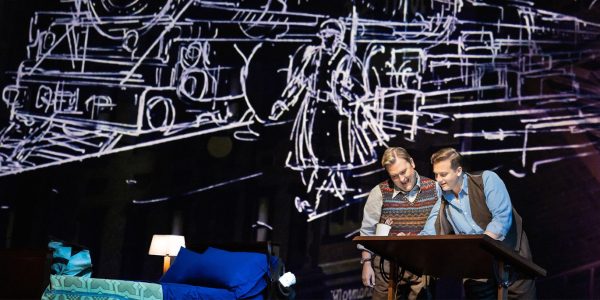
The book’s superheroes appear visually, artfully rendered in digital animations or via acrobatic dancers who tumble on stage or soar through the air on wires in Bartlett Sher’s nimble production. Mr Bates and his librettist, Gene Scheer, wisely never let The Escapist or Luna Moth break into song. Historically, warbling superheroes have not fared well on stage. A Superman musical flopped on Broadway in 1966—as did a Spider-Man one in 2011, despite having music by Bono and the Edge of U2.


Was the Met right to put its trust in superheroes? It seems so. The company reports that “Kavalier & Clay” is its top-performing opera at the box office so far this season. Ticket sales for the opening night were the Met’s highest this decade. Mr Chabon, too, is a fan, telling your correspondent that “I feel I need to see it again.”


Whether audiences outside New York will ever see “Kavalier & Clay” is unclear. The Met did not collaborate with another major company on it, so there is no obvious house for another production. What one character says of The Escapist is also true of new operas: “The greatest trick of all is not to vanish…but re-appear.”

Kavalier and Clay Reviews are in!

I’m so grateful to everyone who came out for Opening Night of The Amazing Adventures of Kavalier & Clay. It was pure joy to finally share this piece with you, and so moving to hear the reactions and read the reviews:

“Kavalier & Clay is its top-performing opera at the box office so far this season. Ticket sales for the opening night were the Met’s highest this decade.”
The Economist

“The Met is back with a bang … Bates’s vocal writing allows his singers plenty of opportunities to shine, with long soaring lines.” 
The Times 

 “An absolute knockout …a highly entertaining evening… Bates keeps the narrative moving swiftly, and his transitions from scene to scene are admirably deft, especially given how frequently the setting shifts… His music is unabashedly tonal, colourfully orchestrated, and he employs electronic sounds with precision and restraint.”
The Financial Times

“This has blockbuster appeal … it takes advantage of the grand opera format and puts the more filmic qualities of Bates’s writing to perfect use.”
– The Observer

 “This was arguably the most successful opening night the company has had since the pandemic … Full of poetic gestures, and moments that truly sear into your heart and mind.” 
– OperaWire 

“Bates’s score with its mix of electronics and acoustic instruments is engrossing and carries real emotional weight. … his use of electronica adds layers of texture and color to the score and makes the comic-book scenes pop with excitement.”
– Seen and Heard International 

Kavalier and Clay Featured in the New York Times

Grateful to The New York Times — and legendary journalist Adam Nagourney (pictured in last photo!)— for this in-depth feature on The Amazing Adventures of Kavalier & Clay, which opens the The Met Opera’s season on Sept 21.

The article traces nearly eight years of work adapting Michael Chabon’s Pulitzer Prize–winning novel into a two-act opera that moves from Nazi-occupied Prague to 1940s New York to a full-blown comic book universe. It also explores the opera’s use of symphonic electronica — blending orchestra with swing-era jazz, mandolin, Jewish liturgical music, and prerecorded electronic textures.

It’s an honor to open the Met season, and I’m deeply thankful to Gene Scheer, Bartlett Sher, Yannick Nézet-Séguin and the extraordinary Met Orchestra and Chorus, Peter Gelb, and everyone involved helping to make this happen!

Continue below or click here to read the full article! 

The Composer Bringing ‘Symphonic Electronica’ to the Met

With “The Amazing Adventures of Kavalier & Clay,” Mason Bates, a.k.a. DJ Masonic, expands the sound world of the Metropolitan Opera.

By Adam Nagourney

 Reporting from Burlingame, Calif.

Mason Bates’s spacious studio, just a few steps from his home near San Francisco, has a Steinway piano, a set of turntables and a row of guitars hanging on the back wall. But for the musical point he wanted to demonstrate on this bright California afternoon, Bates needed a synthesizer: He flicked a switch on his Prophet Sequential and a trembling blast filled the room.

“We are making the superhero world,” he said. “I felt like we needed some electronica.

Bates, 48, was talking about “The Amazing Adventures of Kavalier & Clay,” his Metropolitan Opera debut, which opens the company’s season on Sept. 21. It is based on Michael Chabon’s novel about two Jewish cousins in Brooklyn, one a refugee from Prague, who create a comic book hero to fight the Nazi occupiers there. The opera begins with that synthesizer blast — an electronic invocation of the threat of Nazi Germany, floating on the sounds of a harp, acoustic guitar and piano.

“I call it symphonic electronica,” Bates said. “Something that is beyond the orchestra, to give it that sound of Technicolor, fantasy. And that’s where my background in sound design and DJing became pretty useful.”

Bates is a composer whose music has been performed at symphony halls and opera houses. He is the composer of “The (R) evolution of Steve Jobs,” which premiered at the Santa Fe Opera in 2017. He was the first composer in residence at the Kennedy Center for the Performing Arts.

He is also a DJ who plays bass-heavy techno music for crowded dance floors across San Francisco, under his nom de club, D.J. Masonic.

Lorem ipsum dolor sit amet, consectetur adipiscing elit. Ut elit tellus, luctus nec ullamcorper mattis, pulvinar dapibus leo.

Never before has electronica music been featured so prominently at the Met. “I have written into the score, at moments, ‘Conductor locks into the beat,’” Yannick Nézet-Séguin, the Met’s music director, said, describing the task of keeping time with an acoustic orchestra and a prerecorded synthesizer. “Which means, I am not in charge at the moment. I just listen to whatever the beat is at the time.”

“It’s a challenge,” he added. “But we have been doing new music very regularly in our diet for the past five years. This has prepared us for undertaking this kind of project.”

Commissioning “Kavalier and Clay” is the latest example of how the Met is trying to navigate changing tastes and markets, expanding its repertoire with works by living composers and contemporary stories.

With “Kavalier,” four of the five operas that have opened the Met season since Covid have been new works. (“Medea,” in fall 2022, was the only exception.) Peter Gelb, the general manager of the Met, said: “Yannick and I are very determined to alter the course of opera by doing new works by leading composers. The idea of putting it as a season opener has to do with demonstrating to the public how important new works are to the future of our art form.”

Bates, Gelb added, “represents the kind of American composer who is interested in doing what opera should have been doing with new music for a long time but hasn’t.”

“Kavalier & Clay” is a sprawling novel that explores Judaism, the struggle against fascism, immigration, gay romance and comic book art. It focuses on Joe Kavalier, an artist and magician who escapes Prague for Brooklyn, and his cousin, Sammy Clay, a Brooklyn writer struggling with his sexuality. Working out of an apartment in Brooklyn, they create “The Escapist,” a comic superhero who becomes wildly popular in an America fixated on the advance of the Nazis and the outbreak of World War II.

The novel’s more than 600 pages, covering 25 years, have been squeezed by Bates and the librettist, Gene Scheer, into a relatively brisk two-and-a-half hour opera. Its two acts are staged in Nazi-occupied Prague, New York City in the 1940s and an imaginary comic book universe that is revealed in animation on screens behind the singers, who include the baritone Andrzej Filonczyk as Joe and tenor Miles Mykkanen as Sam.

“It moves like ‘Raiders of the Lost Ark,’” Bates said. “It’s like, boom, boom, boom. Nazis. Superheroes.”

The opera has been nearly eight years in the making, dating back to 2017 when Gelb saw the Jobs opera in Santa Fe. Bates learned that Gelb was in the audience and sent him a note saying he was interested in writing for the Met. Gelb invited him to New York.

When Gelb asked him for ideas, Bates suggested “Kavalier & Clay” — a book, he said, which has “all the ingredients for a great opera.” He had already tracked down Chabon to get his permission to adapt the novel; Bates said that Chabon granted the rights, but has not been involved in bringing the work to the stage. (Chabon, who told Bates he has little interest in opera, declined a request for an interview.)

“Kavalier” was supposed to premiere at Los Angeles Opera as a joint production with the Met, but Los Angeles backed out, citing the cost and complexity of the work as it was struggling to recover from the financial setbacks from the pandemic. (“All operas are complicated and expensive,” Gelb said. “This one is particularly complicated.”) Instead, it premiered with a student cast last year at the Jacobs School of Music, the conservatory at Indiana University in Bloomington, with a stage nearly as large as the one at the Met.


Scheer, the librettist, said adapting a novel with this many story zigs and character zags was daunting; he also was the librettist for the similarly encyclopedic “Moby-Dick,” which is why Gelb said he turned to him. “It’s a huge lift, to be frank,” Scheer said. “We had to cut an enormous amount and reimagine it in a way that would invite music in. That’s the trick to this: to find a way for the music to distill the story.”

(When I asked Bates if he had told Chabon what parts of his novel had been left on the cutting room floor, he responded: “When’s this article coming out?”)

With Adam Adam Nagourney in Burlingame, CA

Silicon Hymnal with Time for Three

Mason’s newest work, Silicon Hymnal, travels to the San Francisco Symphony on Wednesday, July 23 for a thrilling homecoming with one of my longest collaborators, Maestro Robert Moody—who, decades ago, commissioned my very first orchestra piece. This genre-blurring triple concerto was written for the inimitable Time for Three, whose members seamlessly shift between singing and playing in any style. The piece begins as a suite of capricious dances and gradually expands into a full-blown concerto, culminating in two massive final movements. And Mason will be joining them onstage, pumping out the heavy electronica track.

It’s been a busy summer for Silicon Hymnal, with performances at Brevard Music Center under Keith Lockhart, an upcoming date with Sun Valley Symphony and Alsadair Neale on August 4, and a performance with the Philadelphia Orchestra at Saratoga Performing Arts Center on August 21.

Check out this excerpt of Silicon Hymnal here


The Amazing Adventures of Kavalier and Clay Opens Met Opera’s 2025–26 Season

I’m thrilled to announce that The Amazing Adventures of Kavalier & Clay will open The Met Opera’s 2025–26 season on Sunday, September 21!

It’s been an incredible journey transforming Michael Chabon’s masterpiece into an opera, and I’m beyond excited to see this epic tale come alive on the world’s most legendary opera stage. I can’t wait for you all to experience the magic and energy of this production. Huge thanks to everyone who’s been a part of this journey—follow along for new updates and to watch the adventure unfold!

In this exhilarating new adaptation of Michael Chabon’s Pulitzer Prize–winning novel, set shortly before the outbreak of the Second World War, two Jewish cousins invent an anti-fascist superhero and launch their own comic-book series, hoping to recruit America into the fight against Nazism. Incorporating scintillating electronic elements and a variety of musical styles, the eclectic score moves seamlessly among the three worlds of Gene Scheer’s libretto: Nazi-occupied Prague, the bustling streets of New York City, and the technicolor realm of comic-book fantasy. Bartlett Sher’s production provides spectacular visuals to match, with towering sets and proscenium-filling projections designed by Jenny Melville and Mark Grimmer of 59. Music Director Yannick Nézet-Séguin conducts the Opening Night premiere, and baritone Andrzej Filończyk makes his Met debut as the artist Joe Kavalier, who flees Czechoslovakia and arrives at the Brooklyn doorstep of writer Sam Clay, sung by tenor Miles Mykkanen.

Mercury Soul at Gray Area

An extraordinary show combing dance, DJing, and classical music unfolds on Saturday Jan 25 courtesy of Mercury Soul.  Please join us for this one-night-only event! San Francisco’s legendary dance company ODC will be appearing between DJ sets mixed by me and DJ Justin Reed of Chicago, interspersed by short performances of Chopin, Adams, Mozart, Piazzolla, Mendelssohn, and Bach – plus some brand-new interludes I’ve composed to tie it all together. You’ll be transported from the dance floor to soulful performances merging dance and classical music —and back again!